

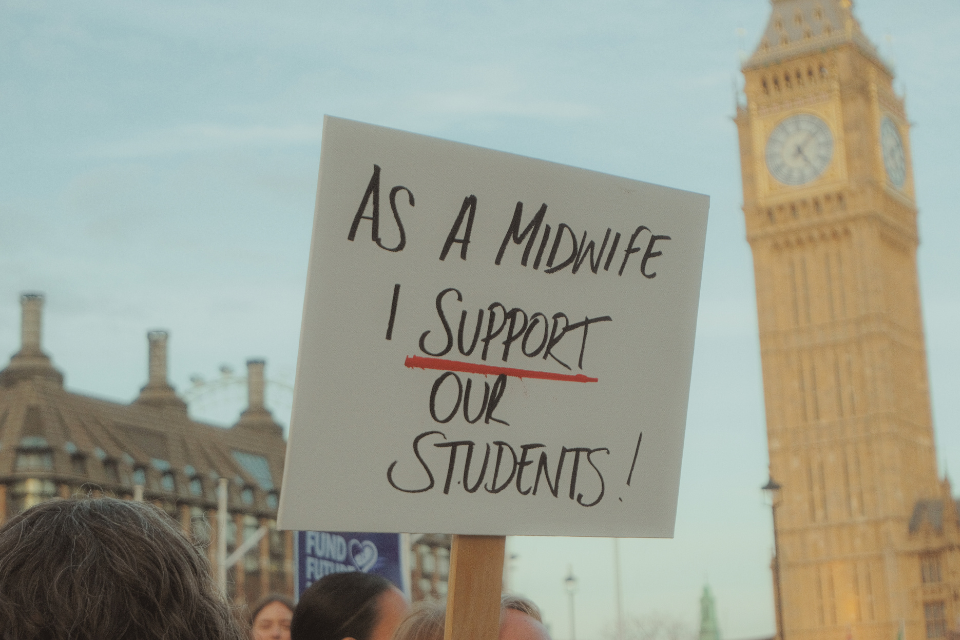
Despite the known shortage of midwives across the UK it seems to be so wrong that student midwives are qualifying with no jobs available to them. But this is the reality as highlighted by the RCM. And the students have risen up. Safia Saad, student midwife and campaign organiser for Fund Future Midwives shares the issues behind the campaign and appeals for our help.
Before I began my midwifery training, I completed a law degree, a course widely regarded as one of the most demanding academic paths. Yet, in comparison, law felt like a walk in the park. Midwifery is one of the most difficult degrees in my opinion, and every student midwife I know gives more of themselves than they ever imagined possible. And still, many of us are graduating into unemployment.
This is happening at the very same time maternity services are short staffed, overstretched, and under intense scrutiny. It is a contradiction so stark that it has become impossible for us to stay silent.
Midwifery students complete a minimum of 2300 clinical hours, often working nights, weekends, and on call shifts while studying full time. We provide real care to women and birthing people from our very first shift. We witness the pressures midwives face, the rising acuity, and the consequences of chronic understaffing. We see the impact on safety, on morale, and on the families who rely on us. And yet, despite this essential contribution, many newly qualified midwives cannot secure a job upon graduation.
This is not only demoralising; it is dangerous. Families are already struggling to access safe maternity care. Midwives are leaving the profession faster than they can be replaced. Services rely heavily on bank and agency staff. And still, trained midwives ready to work are being turned away. It is a waste of talent, training, and public investment at a time when the system can least afford it.
For student midwives in England, the situation is even more precarious. We pay full university tuition fees while undertaking extensive unpaid clinical work, often leaving university with significant debt before we have even entered the NHS workforce. England is now the only nation in the UK where student midwives must largely self-fund their training. In Wales, Scotland, and Northern Ireland, tuition fees are covered and bursary support is provided. This inequality is stark, and it shapes who can afford to become a midwife at all.
The removal of the NHS bursary in 2017 created a generation of midwives who were required to take on personal debt to enter an essential public service profession. Many of us juggle paid work alongside placement and academic demands simply to survive. The financial strain is pushing students out of training and deterring future applicants. At a time when official reports repeatedly call for strengthened maternity services, this is both alarming and short sighted.
Our campaign was born from this reality.
- We are calling for urgent action to protect the future of midwifery and the safety of women, birthing people and babies.
- We are demanding guaranteed job opportunities for newly qualified midwives so trained staff can enter the workforce.
- We are calling for the removal of tuition fees for midwifery degrees in England, and for the introduction of a fair, sustainable bursary that reflects the demands of clinical training.
- We are also calling for financial justice for those already affected: the cancellation or reimbursement of tuition fee debt for Registered Midwives and Newly Qualified Midwives who trained after 2017.
Please sign the petition. https://www.change.org/p/student-and-newly-qualified-midwives-need-jobs-and-fair-funding
Like many student midwives, I will qualify with around £60,000 of debt simply for choosing to enter an essential public service.
If the government wants safer maternity care, the solution is standing right here; thousands of trained midwives ready to serve. The only question left is whether they will let us.
Yesterday students, midwives, supporters and MP’s rallied in Parliament square to raise the issues. These images show the depth of feeling.
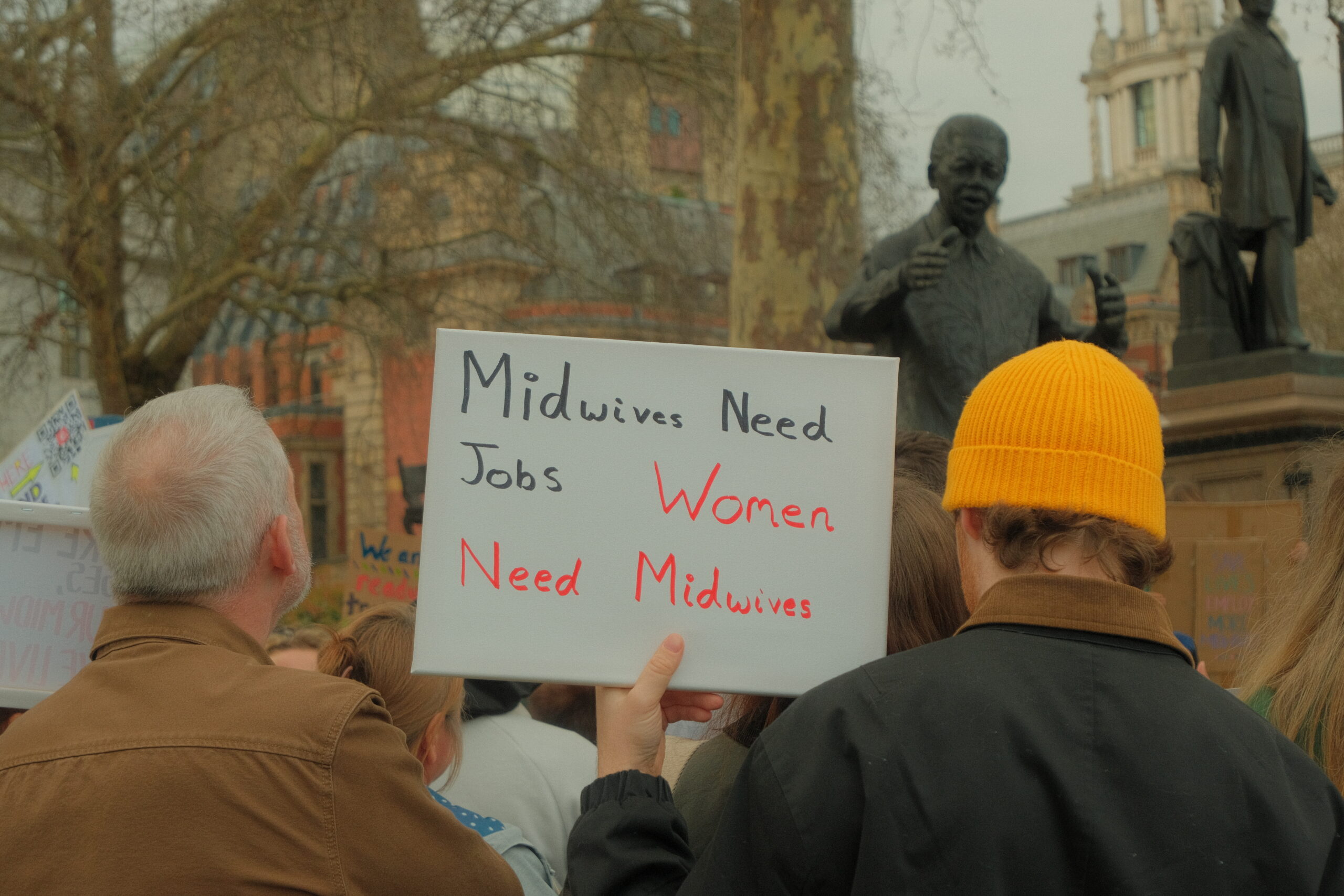
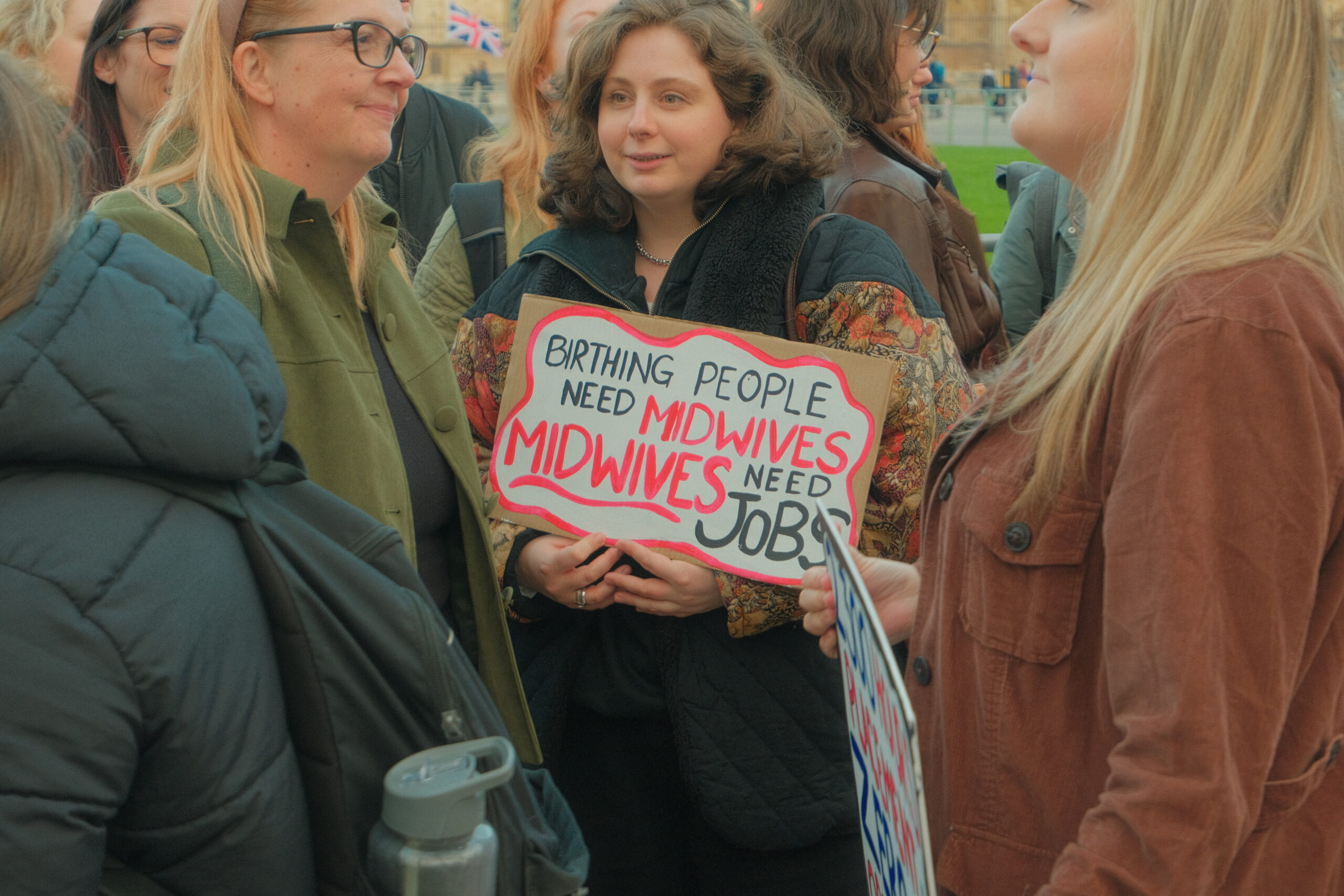
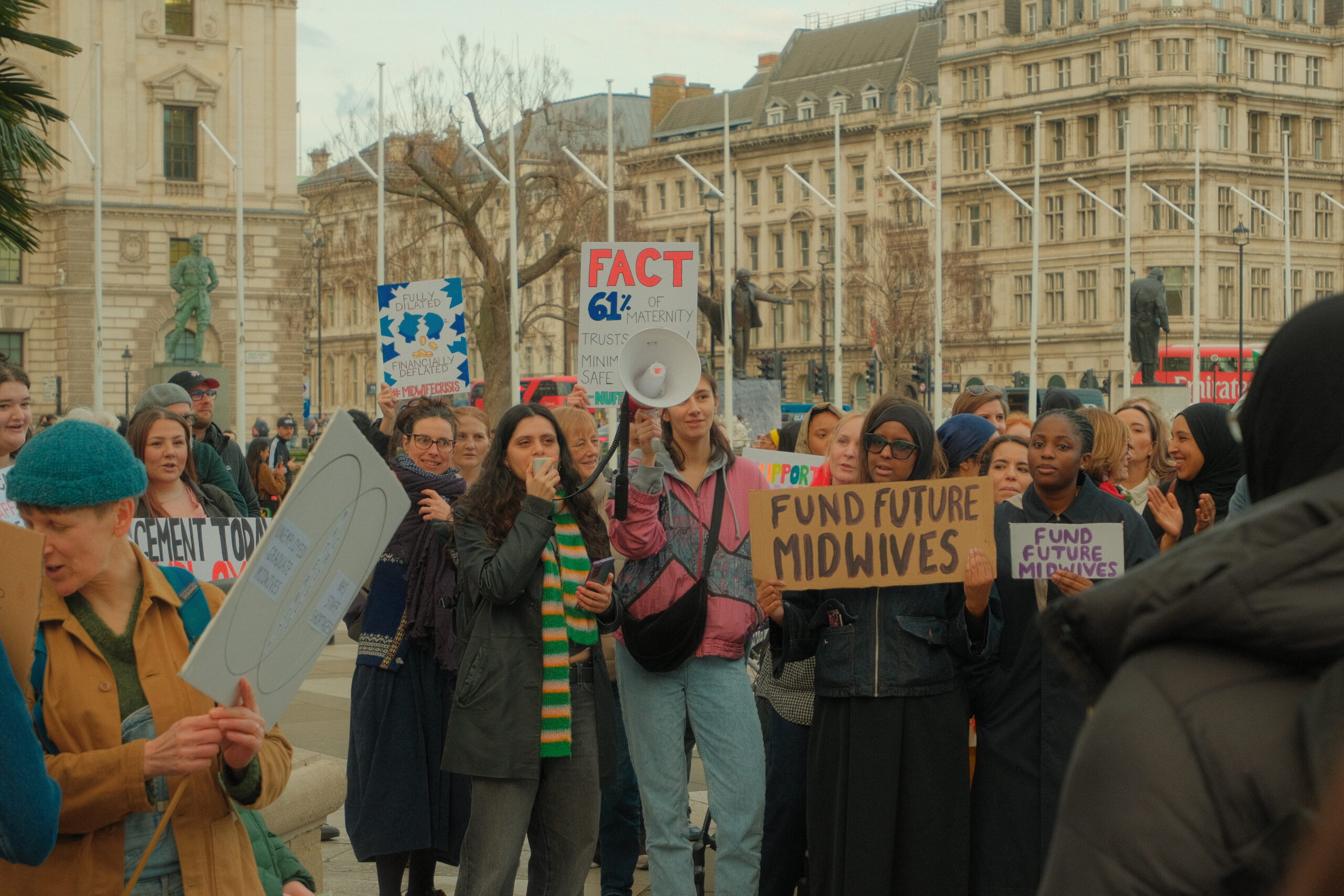

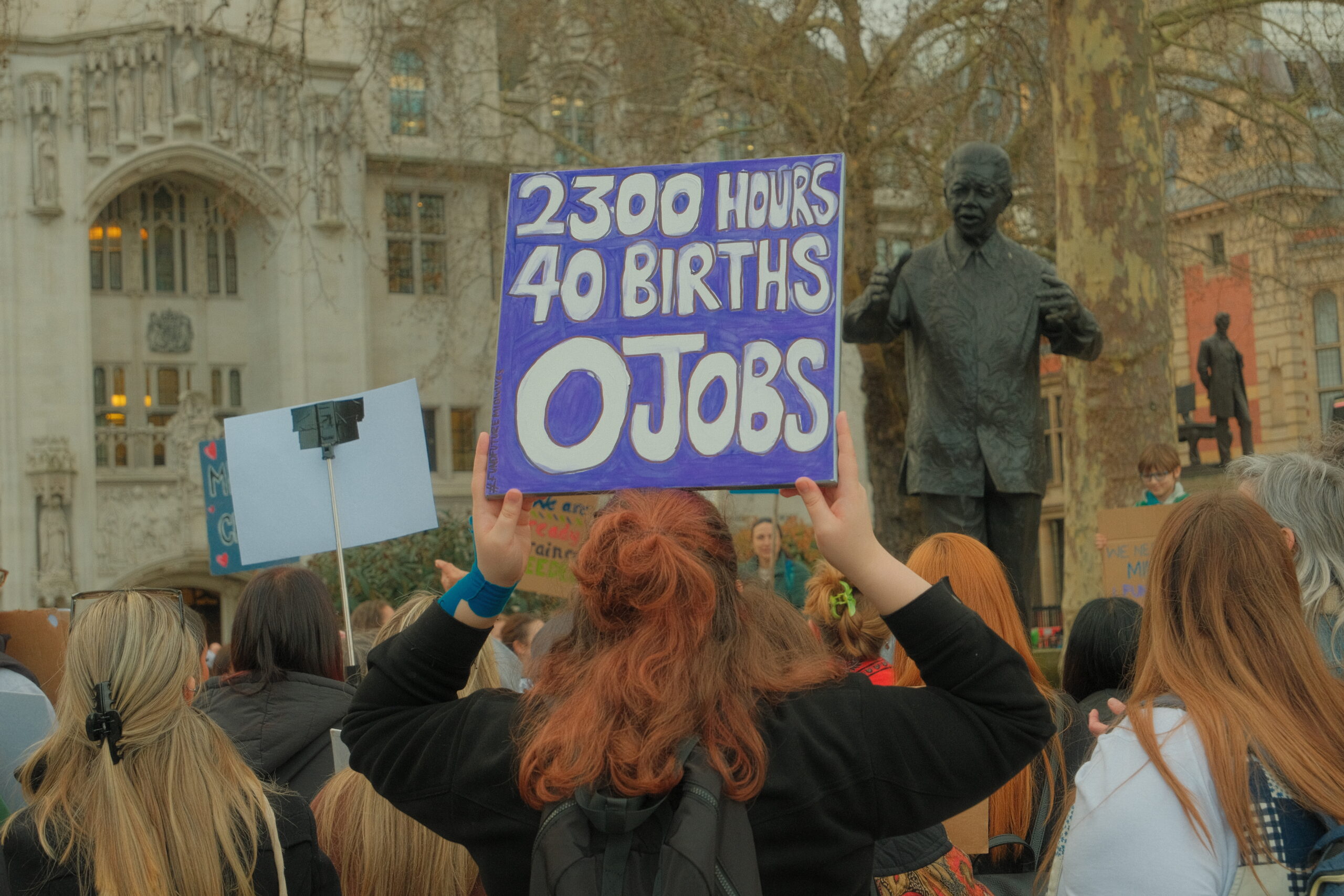

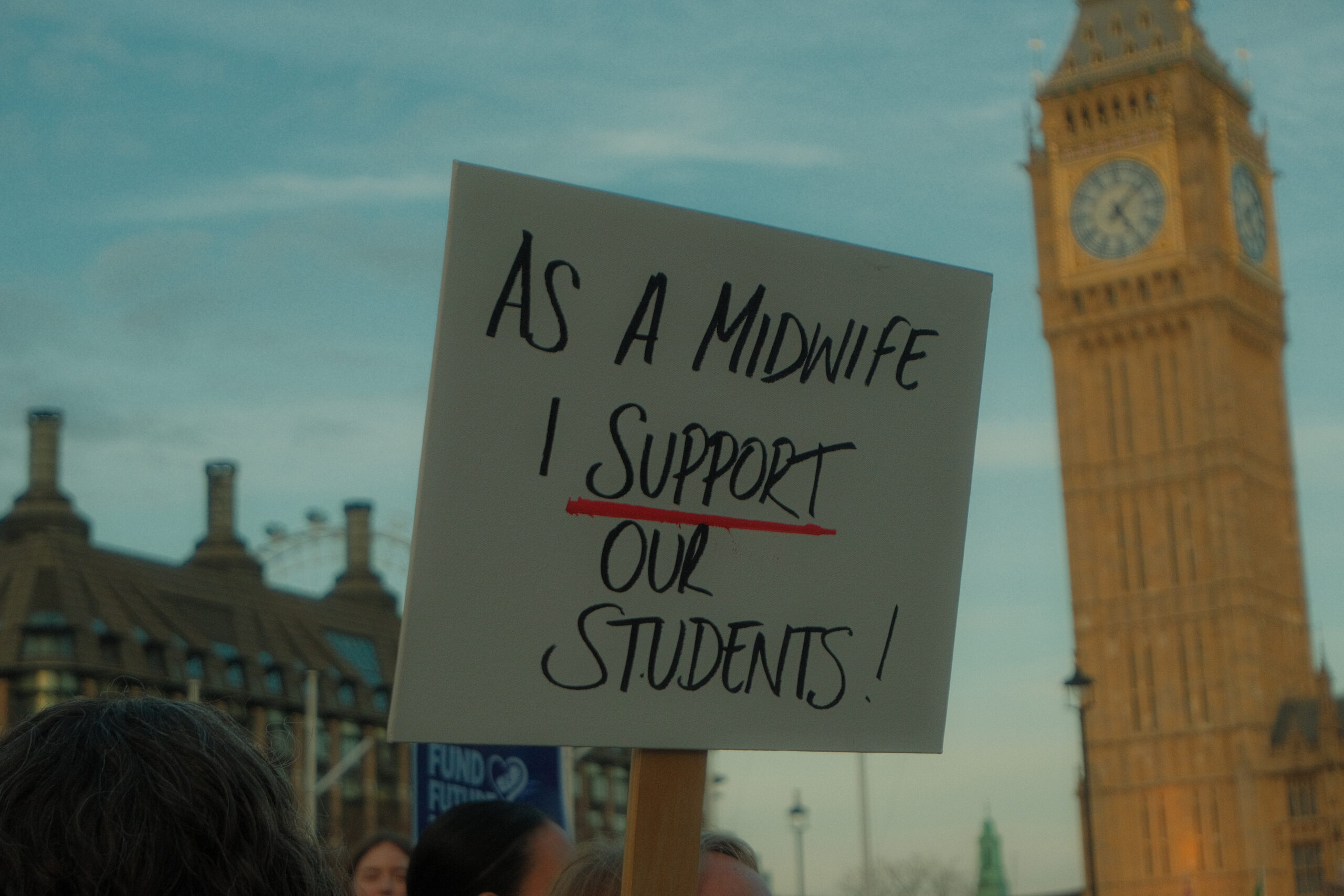

Please join us in fighting for change.
Safia Saad, Student Midwife and Campaign Organiser
March 2026
Safia and student peer Nicola Attridge were on the Midwifery Hour last night. Check out at the link here.
2 comments
It would have been amazing to have more notice about this protest as I am sure that more could have attended. I have heard this echoed from my lecturer colleagues and student midwives.
There is a shortage of staff within all areas of the NHS, leading to poor care.
Staff who are working are stressed and burnt out
It due to for government funding since years go
I’ve worked in the NHS since 1992, and never experience a time where there was good staffing levels or nhs funding.
In 1995 there was a staff recruitment freeze in the north of England and nursing staff down graded
I work in health visiting and we have been informed by our manager we are down by 300 hours a week in Health visitor hours due to inability to employ health visitor in our area which is council, since the nhs allowed this to be tended by non nhs employers, we get less pay the a nhs health visitor. So nhs health visitor are leaving to get more money out of our city. My role of health visitor is being taken on by staff nurses and we are been allocated the higher needs ie safeguarding, which can be very demanding leading to stress and burn out. The future looks very depressing for the nhs staff and nhs patients and client
Comments are closed.