

New UK research has identified significant variation in how women are supported to make decisions about miscarriage treatment, highlighting the need for clear information, meaningful choice and sensitive communication from healthcare professionals.
Around 15% of pregnancies end in miscarriage, most commonly during the first 12 weeks. For women experiencing early pregnancy loss, the way treatment options are explained and discussed can have a lasting impact on their experience of care.
A new study led by Rebekah De Silva, Research Midwife at Aneurin Bevan University Health Board, has explored how women make decisions about miscarriage management and the support they receive. Funded by a Health and Care Research Wales Research Training Award, the research was recently published in MIDIRS Midwifery Digest.
The study, Quality decision-making in miscarriage care: a mixed-methods exploration in the UK, asked women who had experienced a miscarriage before 13 weeks to complete a questionnaire about their care, including the treatment options offered to them and how these were explained.
Its findings highlight considerable differences in women’s experiences, particularly in the information they received, the choices available to them and the support they were given when making decisions.
Three treatment options, but not always a meaningful choice
There are three main approaches to managing an early miscarriage:
Expectant management: allowing the miscarriage to occur naturally, without medical or surgical intervention.
Medical management: using medication to help initiate or speed up the process.
Surgical management: removing the pregnancy tissue through a surgical procedure.
The most appropriate approach depends on individual circumstances, clinical considerations and the woman’s own preferences. Some women may wish to avoid surgery or a hospital stay, while others may prefer a more immediate resolution. Practical considerations, including work commitments and caring responsibilities, can also influence decisions. Clinical factors such as the risk of infection or haemorrhage may affect which options are suitable.
However, the research found that although most women received their preferred treatment, only around half had been offered more than one option. Women who felt they had limited choice were often less confident about their decisions and less satisfied with their care.
Rebekah De Silva said the findings demonstrated the importance of how healthcare professionals communicate treatment options, rather than focusing solely on the treatment ultimately received.
Some women described compassionate care, clear information and appropriate support. Others recalled expectant management being presented as the default or “natural” approach, without a meaningful discussion of alternatives. This left some feeling restricted and unsupported in their decisions.
De Silva emphasised that even where clinical circumstances limit the available options, open and sensitive conversations can help women understand their situation and remain involved in decisions about their care.
The personal impact of miscarriage care
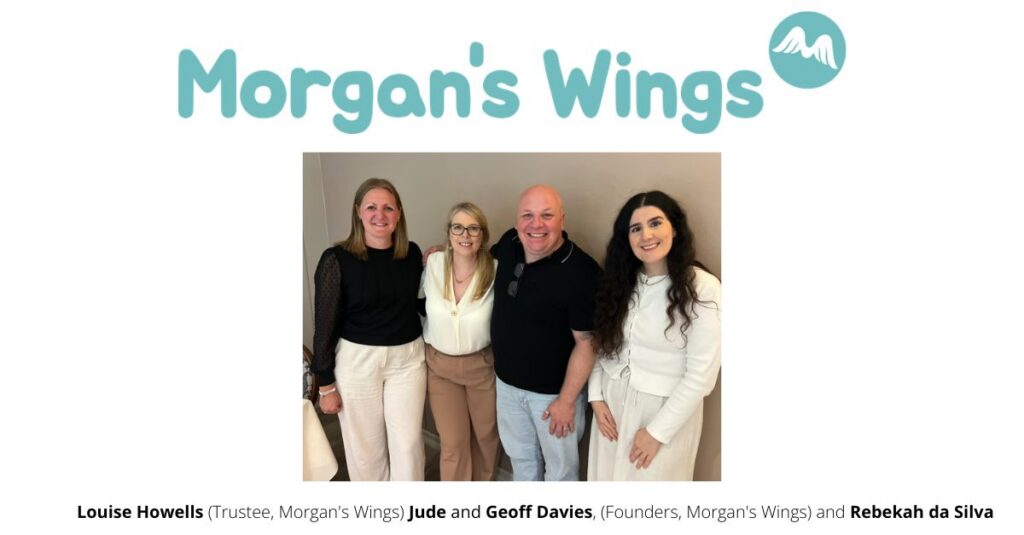
For Jude Davies, whose experiences of miscarriage prompted her and her husband Geoff to found the charity Morgan’s Wings, the findings reflect the importance of ensuring women understand what is happening to them and feel supported throughout the process.
The couple lost their son Morgan in 2019 and their daughter Bee in 2020. Their experiences led them to establish Morgan’s Wings, which provides practical and emotional support to people affected by miscarriage, including a support group, toiletries for unexpected hospital stays and information to help women understand their treatment options.
Jude’s first miscarriage began when she was six weeks pregnant with Morgan. After initially being reassured following a scan, she later experienced heavy bleeding and required emergency hospital care.
Although treatment options were discussed with her, she felt she did not have the information she needed to make an informed decision.
“I remember feeling scared and confused and rushed into making a decision,” she explained. “Gentle, clear explanations about what was happening, what my options were and what each option might mean, as well as time to ask questions, would have made a huge difference.”
The first treatment she chose was unsuccessful, and she subsequently underwent medical management, which was also unsuccessful, before surgical management proved effective.
The experience prompted Jude and Geoff to consider how they could help others facing similar circumstances.
Jude said the experience of miscarriage can be particularly difficult because women are being asked to make decisions about their care while still processing the loss of their baby.
“Informed choice is about feeling supported to make the decision that is right for you, rather than simply being presented with options and expected to choose,” she said.
What does this mean for midwifery practice?
The findings underline the importance of treating decision-making as an ongoing conversation rather than a single discussion about treatment options.
For midwives and other healthcare professionals involved in early pregnancy and miscarriage care, this means ensuring that information is clear, sensitive and tailored to the individual. Women need opportunities to ask questions, understand the potential benefits and limitations of each suitable approach, and consider how different options might affect them.
It is also important to recognise that preferences will vary. A woman may prioritise avoiding surgery, while another may wish to avoid waiting for the miscarriage to occur. Previous experiences, family circumstances and the emotional impact of pregnancy loss may all shape what feels right for an individual.
Offering choices does not simply mean listing the available treatments. Women need to understand what each involves and what they can expect, with the time and support to consider their options wherever circumstances allow.
Where clinical factors mean that not all approaches are appropriate, explaining why and involving women in decisions about the care that is available remains essential.
Jude hopes that sharing her experiences will help other women feel better informed and less isolated.
“Miscarriage happens to so many people but we don’t talk about it enough,” she said. “That can mean that women don’t know what their options are or what might happen. Each miscarriage I’ve experienced has been very different. I hope I can use my experience to help women feel more informed and less alone.”
The research offers an important reminder that the quality of miscarriage care is shaped not only by clinical management, but also by the conversations that take place around it. Clear explanations, compassionate communication and genuine involvement in decision-making can help women feel heard and supported at an exceptionally difficult time.
Find out more: Visit Morgan’s Wings for information about the charity and its support for families affected by miscarriage.
Make your voice heard: Help shape future miscarriage care in Wales
Have you experienced pregnancy loss during the first 13 weeks of pregnancy within the past three years? Health and Care Research Wales is inviting people across the UK to help shape research into improving shared decision-making in early pregnancy loss care in Wales. Participants will be able to share their experiences and views on what good care looks like and where improvements are needed. Contributions will be handled sensitively, and participants will be paid £27.50 per hour for their time. The deadline to express interest is 30 October at 12 noon. Find out more and register your interest.
Maternity & Midwifery Forum
October 2026