

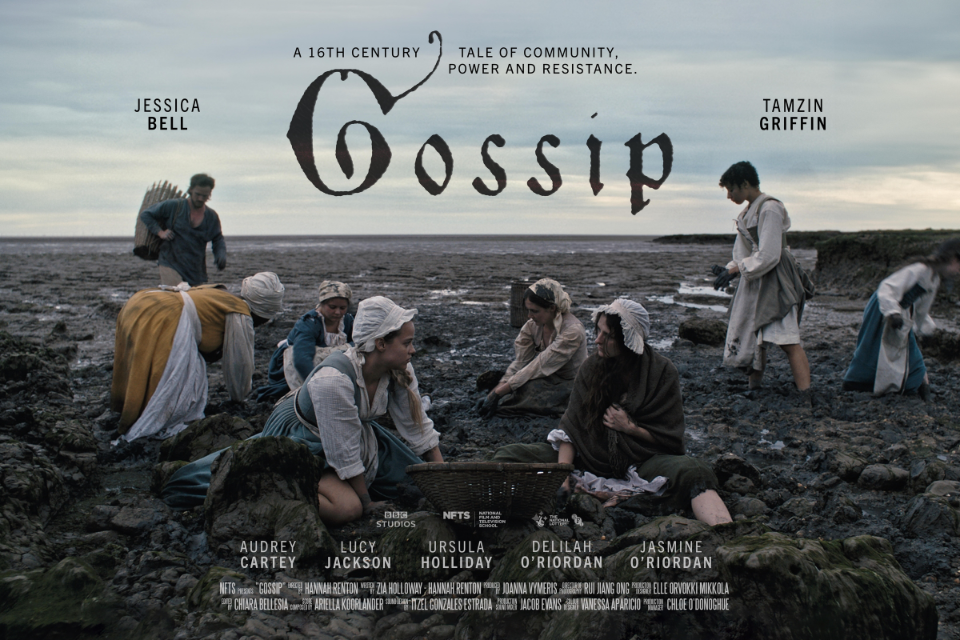
Gossip is a powerful short film that brings to life the often-overlooked stories of midwives, healers and women whose knowledge and influence led to their persecution during the witch trials of the 16th century. Directed by Hannah Renton and now part of the Birth Rites Collection, the award-nominated film explores themes of birth, community, care and resistance, while drawing striking parallels between historical attitudes towards women’s bodies and contemporary debates around reproductive rights and maternal care. In this interview, Hannah and midwife Audrey Carty discuss the inspiration behind the film, the realities of childbirth it portrays, and why its message continues to resonate today.
Gossip, the 17-minute film directed and co-written by Hannah Renton unearths the histories of women persecuted as witches in the 16th century. Shot along the Essex coast, the film revisits the region’s history of witch trials through an evocative lens, illuminating how women’s bodies and voices have long been sites of both knowledge and control.
Synopsis: East Anglia, 1584. When a young woman goes into labour, a group of women led by the local midwife gather to guide her through the trials of labour. But as they celebrate the safe arrival of new life, a greater danger arrives at the door. A 16th century tale of community, power and resistance. Gossip tells the untold story of women who were persecuted as witches – midwives, healers, women with knowledge and power.
Originally made as a graduation film at the National Film and Television School, Gossip was shortlisted for a BAFTA Yugo Student Award for Best Live Action (2023) and toured across the UK bringing the film directly to local communities, screening at venues such as Metal Southend, Suffolk Archives and the East Anglian Folklore Centre.
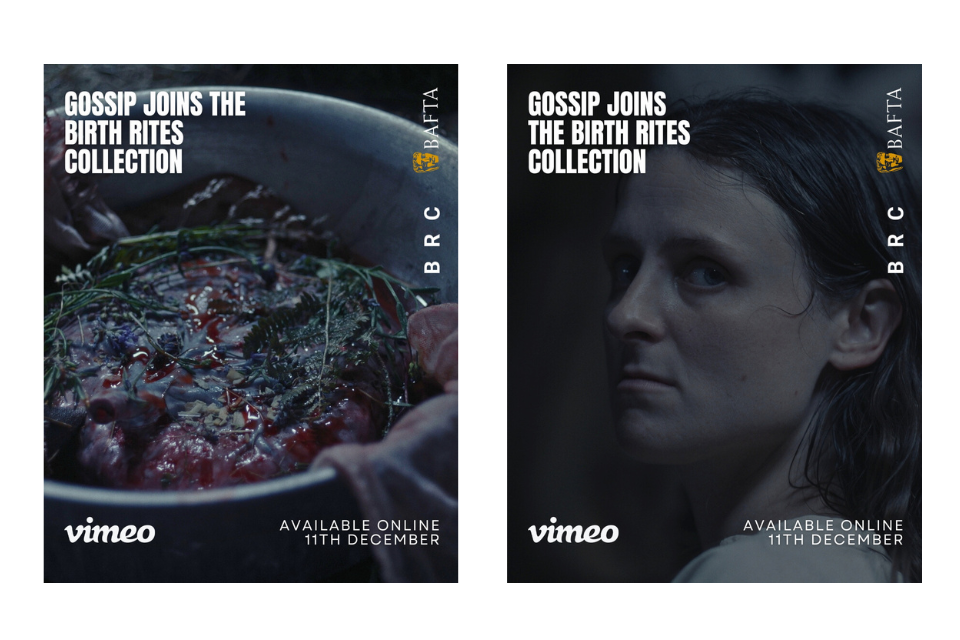
Now, the film enters a new phase. Joining the Birth Rites Collection, the first and only contemporary art collection dedicated to childbirth, situates Gossip within conversations about reproductive rights, maternal care, history and the politics of birth.
Birth Rites has now released the film online, opening the work to wider audiences and inviting viewers to revisit the past to better understand the present. You can now access Gossip on Vimeo via the Birth Rites Collection. All proceeds support both the artist and the Birth Rites Collection’s public programmes.
Helen Knowles, the Collection’s Director and Curator, wrote:
“The midwife is a powerful woman whose deep comprehension of the female body and its seemingly mysterious functions has meant that male counterparts have traditionally persecuted them for their knowledge. Hannah’s film is a sumptuous and potent, yet moving vignette of a moment in the history of women and birth. We are honoured to include this work in the collection.”
Here, we share a short interview with the film’s Director and Co-writer, Hannah Renton, and Audrey Carty, a midwife who consulted on and appears in the film, about the histories that inspired the work and why its story continues to resonate today.
Why Gossip? What inspired or motivated you to create a film about midwives/women healers who were persecuted as witches in the 16th century?
Hannah: The film was very inspired by Silvia Federici’s Caliban and the Witch, which links the persecution of women by the witch hunts to the transition to capitalism and the harnessing of reproductive labour. Though it seems there is mixed evidence that midwives were particularly targeted, certainly one of the women killed as a witch near where my family is from in Essex, Ursula Le Kemp was, and there is evidence that it was often wise women and older women. I wanted to tell a story of these women and explore what was lost: the person, the knowledge and a more communal way of experiencing birth and death.
I was also intrigued by the particular rates of witch persecution in Essex where much of my family is from and whose landscape and estuary mud I consider a kind of muse. In the final image you see the women in the mud, mourning Helen and I imagine their stories sinking into the mud for us to find them today.
What did taking part in Gossip mean to you personally, as someone who supports women in birth in your everyday life?
Audrey: Taking part in Gossip enabled my feelings and emotions to be transported to a space of raw, non-medicalised, natural childbirth. Even though I was not playing the character of the midwife in the film, I consulted on the reality of birth, which the actors captured expertly. Birthing support is such a vital part of the pregnancy and childbirth process. Having a “gossip” of women supporting the pregnant woman, before, during and after the birth, balanced the powerful but endearing strength and emotional warmth that emanated from the group.
Gossip speaks of care, resistance, and the struggles faced by women at the time. How do you think the story of the film connects with audiences today?
Audrey: Audiences today can connect with the struggles faced by women at the time as challenges still remain; they are just in different packages. Today there is still the “gossip” of women who stand in solidarity, supporting sisters in arms. The tenacity and care is now more visible, with so much owed to the #MeToo movement. Even from a midwifery perspective, the struggle remains. There has been so much medical intervention, predominantly led by male physicians whether in research or in clinical practice, within the pregnancy and childbirth process, that the natural ebb and flow of pregnancy and childbirth has been virtually erased. Albeit due to changing communities, culture and lifestyles, medicalised childbirth has its place. However, women who are fit, well and able to give birth naturally, many have now become afraid of this natural process and opt for a medicalised route as women have been stripped of their intrinsic and primal ability of how to naturally respond to pregnancy and childbirth.
Hannah: I called the film Gossip as a way to bring the past closer and introduce a way of seeing the film through a contemporary lens. I think the film connects with audiences through the connection, care, intimacy, trust and knowledge between the group of women (the gossip). And then the violation and loss that happens at the end. I think this is something that many of us feel a longing for: community, connection, shared knowledge and exchange outside of ‘work’ and capitalism.
I always wanted Gossip to collapse the time/distance between now and the past. To show us that many of the forces and experiences of oppression for women (and other peoples) are very similar to the past, and even the witch trials. Focusing the film on a birthing woman and a midwife reminds us that women’s bodies have always been a major site of this oppression and struggle, which we see now in the increasing attacks on abortion and reproductive freedom and the rates of gender-based violence.
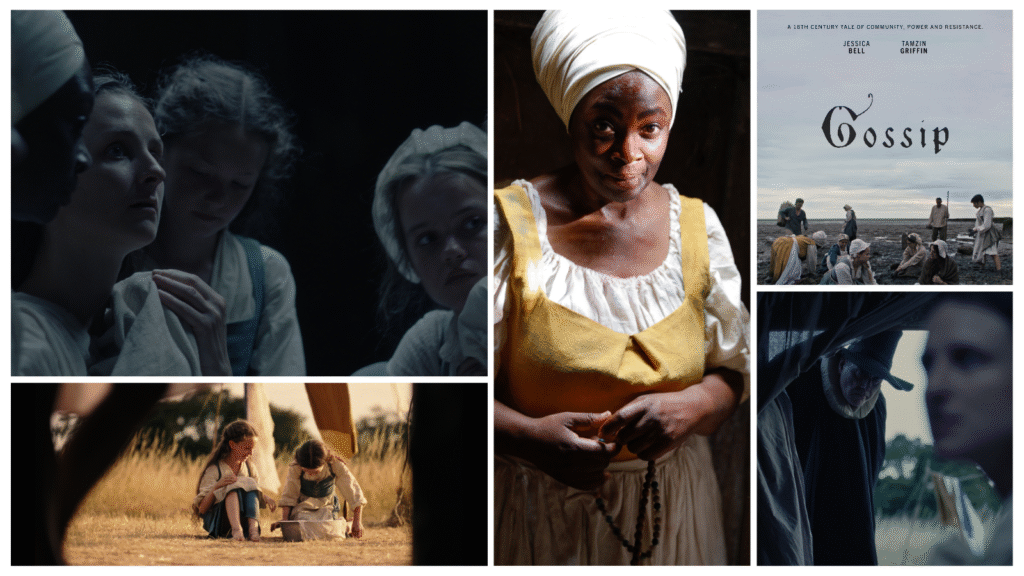
Hannah Renton is an award-winning filmmaker whose work explores intimacy, the politics of care and women’s histories. Find out more about her work at www.hannahrentonfilm.com and on Instagram.
Hannah Renton, Filmmaker, Director & Co-writer of Gossip
June 2026